From outcome to delivery, each choice has a purpose.
The approach is not a fixed production package. Define what needs to change, organize the content and production around it, then check that the result works in the context where people will encounter and use it.
Frame the outcome
Turn “we need a piece of work” into a brief that supports decisions. Websites, images and film are possible vehicles; the intended response determines which ones are useful.
Questions to settle first
- Who will encounter it? What do they already understand, and what is missing?
- What should happen next: recognition, an enquiry, a choice or an action?
- Where will it appear? What source material, facts and constraints already exist?
What this stage produces
- A clear project outcome and the people it addresses.
- A sequence of information, with priorities for what people need to see first.
- Observable completion criteria, priorities and explicit exclusions.

One product, three different tasks
Brand recognition calls for a coherent visual story. Product evaluation needs clear images and information. Finding a product and contacting a business needs a usable digital entry. Choose the intended response before the production mix.
See how a digital entry carries information ↗Assemble the right system
One information core can take the form of images, motion and a digital entry. Each part has a different job and hands the user onward, rather than repeating the same introduction three times.
Give each piece a distinct job
- Align names, facts, visual direction and permitted source material before adapting the content.
- Images clarify; motion sequences attention; a website connects information, exploration and the next action.
- Only useful components enter the scope. A single image can also be a complete delivery.
What this stage produces
- A content and deliverable map: why each piece exists and where it will be used.
- An agreed visual or structural direction and the source material each part needs.
- Defined quantities, formats, revision rounds and responsibilities.
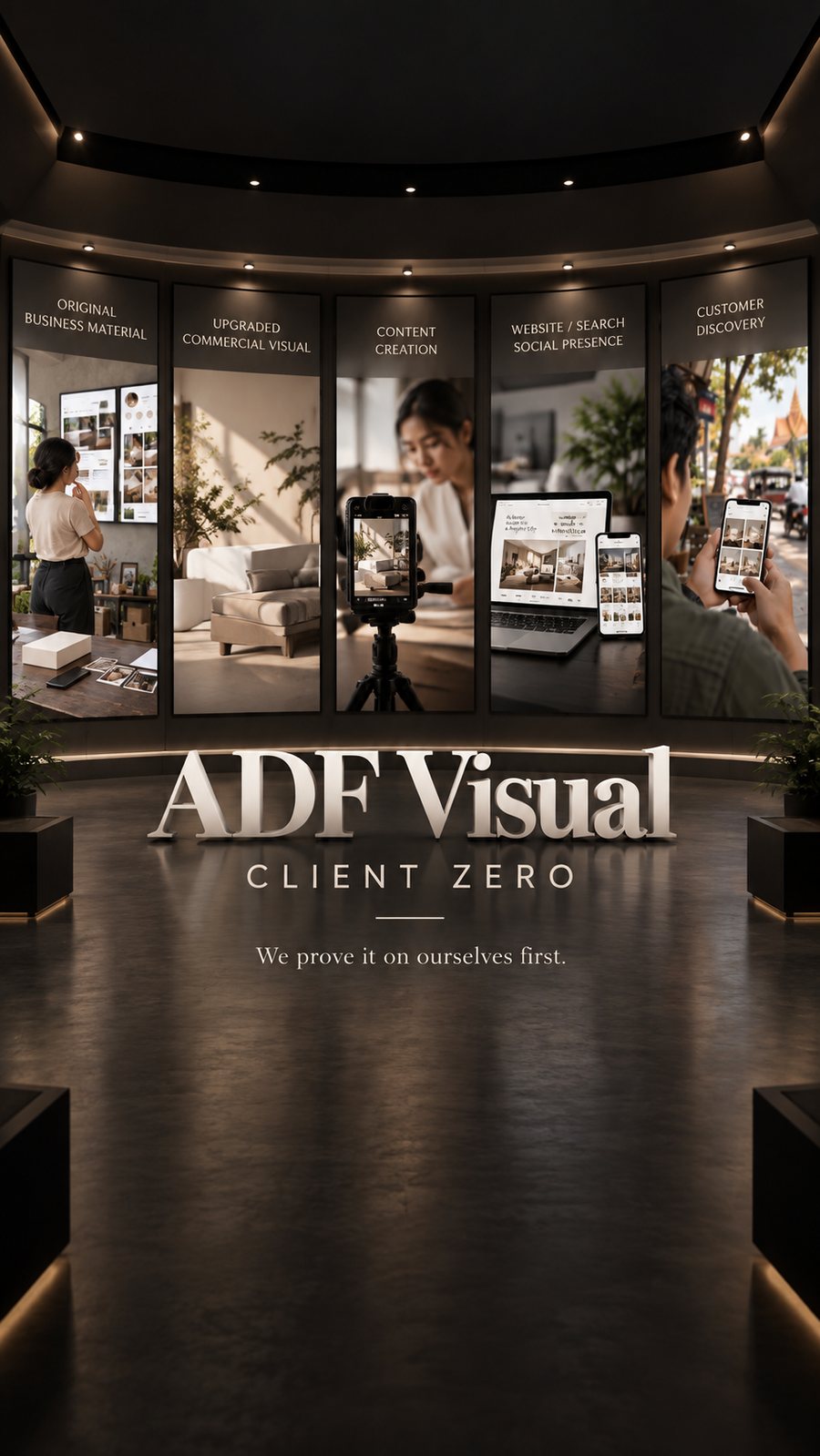
From a visual theme to multiple touchpoints
The studio concept below is not commissioned client work. It connects visuals, motion and web around one information core: recognition stays consistent while each format performs its own task.
Explore image expression and same-subject comparisons ↗Adapt to the real context
A finished asset is not automatically ready for use. Language, screen ratio, publishing context and the next person using it all affect whether the message reaches its audience.
Check real conditions of use
- Do all three languages communicate naturally and preserve the same priorities? Layout matters as much as wording.
- Can people see and operate it on mobile and desktop? Are landscape, portrait and short formats suited to their placement?
- Do links, contact details and next steps work? Can the final assets be used as agreed?
What this stage produces
- Final versions for the agreed channels and devices.
- Checked content, links and a delivery list.
- A clear handoff of files, usage scope and future update responsibilities.

One capability, different viewing contexts
Landscape film can build a scene and a story. Short portrait motion can focus on one action. The homepage previews the work; the deeper page supports full viewing and preparation for a brief.
Explore film and motion examples ↗See these relationships in the work
These are labeled studio concepts. They demonstrate approaches, not completed paid client commissions.
Start with a goal and the material you already have.
Send the intended use, desired response, existing material, languages and timing. We first confirm what is deliverable, then establish scope and a quote.